


Cart
Your shopping cart is empty!
It's never too late to make things right :)


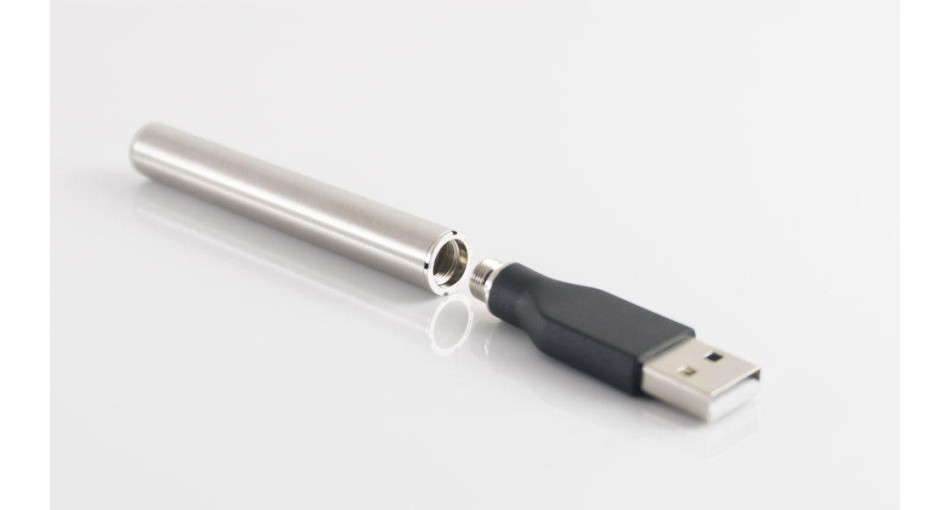
If your 510 battery starts to drain faster or heat up during use, the problem is often not related to a defect, but to the charging mode. Lithium-ion batteries are sensitive to deep discharge, overheating, and constantly being held at 100 percent.
Proper charging of a 510 battery affects not only autonomy, but also voltage stability. And stable voltage means uniform heating of the cartridge and no unnecessary load on the coil. Next, we will analyze how the battery works and what really reduces its resource.
Lithium-ion cells
Most modern 510 batteries are powered by lithium-ion batteries. They are compact, have good energy density, and can withstand hundreds of charge-discharge cycles.
But lithium-ion does not like extremes:
mAh capacity and real autonomy
Capacity is measured in mAh. For example:
It is important to understand that a larger capacity does not mean a better battery. It simply lasts longer without recharging. The lifespan is determined by the quality of the cells and the operating mode.
Battery degradation
Over time, any battery loses some of its capacity. This is a normal process. But the rate of degradation depends on how you charge the 510 battery.
If you constantly discharge it "to zero" and charge it to the maximum, wear accelerates. Optimal conditions significantly extend the service life.
Using an inappropriate adapter
Some users connect the 510 battery to high-current fast chargers. The small battery is not designed for aggressive fast charging.
It is better to use:
Excess power creates heat, and heat is the enemy of a lithium-ion cell.
Constant charging to 100 percent
Modern batteries have overcharge protection, but constantly maintaining them at maximum voltage accelerates wear.
It is optimal to maintain the charge between 20 and 80 percent. This reduces the load on the cell.
Complete discharge "to zero"
If the 510 battery is regularly completely discharged, this will negatively affect its lifespan. It is better to charge it when the indicator shows a low level, rather than waiting for it to completely shut down.
Charging in overheated conditions
Do not charge your device in a hot car or in direct sunlight. Elevated temperatures increase internal resistance and accelerate degradation.
Even if everything works fine on the outside, the resource is reduced.
How overcharge protection works
Most modern models have a controller that cuts off the current supply when it reaches 100 percent. This reduces the risk of damage.
But the controller doesn't eliminate the physics of a lithium-ion cell. Prolonged exposure to maximum voltage still creates stress.
When is it safe?
If the battery is new, of good quality, and has protection, leaving it overnight once will not be a critical problem.
When is it better not to take risks?
If the device is old, gets hot, or the charging unit is of unknown origin, it is better not to leave it unattended.
Regular overnight charging won't kill your battery instantly, but it will shorten its lifespan in the long run.
How to extend the life of a 510 battery
Even a compact battery can work stably for a long time if the operating mode is selected correctly. Lithium-ion does not like extremes, so the main rule is to avoid overloads.
Optimal charging range
The most comfortable mode for a 510 battery is to keep the charge between about 20–80 percent. This does not mean that you can’t charge to 100 percent, but if you do it every day, degradation will accelerate.
Practical approach:
This mode allows you to reduce wear on internal elements.
Proper storage
If the 510 battery is not used for a long time, it should not be left completely discharged or fully charged. The optimal level for storage is medium charge.
It is also important:
Drops and impacts can affect not only the body, but also the 510 connector pin.
Temperature control
Overheating is one of the main factors of degradation. If the battery heats up noticeably while charging or operating, this is a signal to pay attention to:
Sometimes the problem is not the battery, but an overload due to a faulty cartridge or a dirty connector.
Even with proper operation, the resource is not infinite. There are symptoms that indicate wear.
Rapid loss of charge
If the battery is draining significantly faster than before, and this is not due to increased usage, the capacity has probably decreased.
Unstable voltage
As the battery wears out, it may produce unstable voltage. This is manifested in:
Such symptoms are often mistakenly attributed to the cartridge.
Case overheating
Excessive heating during charging or puffing may indicate internal wear or problems with the controller.
Problems with the 510 connector
If the center pin is loose or the threads are worn, the contact becomes unstable. This affects the current flow and can place additional stress on the battery.
When to replace the battery
If 510 battery:
It is more logical to replace it than to try to "resuscitate it." A new battery will provide stable voltage, which is important for cartridges with thick extracts.
Proper charging of a 510 battery directly affects its lifespan and stability. Lithium-ion batteries do not like being completely discharged, constantly charged to the maximum, and overheating.
Following simple rules - moderate charging, temperature control and using the appropriate adapter - can significantly extend the service life.
On the DeviceUA blog, we examine the technical nuances without exaggeration so that the user understands how their device works and how to avoid unnecessary costs.


