


Cart
Your shopping cart is empty!
It's never too late to make things right :)


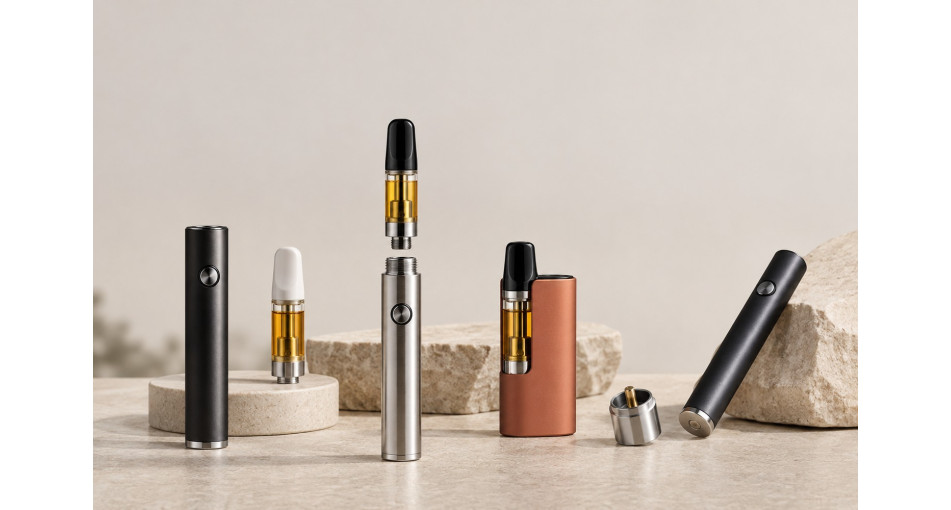
A cartridge may be labeled 510, but that doesn't guarantee a problem-free connection to every battery. The thread is only responsible for the mechanical connection. In practice, you should also check the fit, contact access, activation method, and the range of settings allowed by the cartridge manufacturer.
The simplest rule is: first determine the exact model and design of the cartridge, and only then look for a battery with a confirmed 510 thread and compatible form factor. This helps to avoid a situation where the cartridge is screwed on but is wobbly, does not make contact with the battery, or does not fit into the housing.
The 510 designation usually refers to the common thread format between the battery and the cartridge. It is useful as a first filter: if both components explicitly state 510 thread or 510 thread, they can be considered a potentially compatible pair.
The word “potentially” is key here. The thread does not describe the height of the cartridge, the diameter of its base, the location of the air channels, the presence of a magnetic adapter, the depth of the landing slot, or electrical limitations. Therefore, choosing only by the inscription “510” sometimes ends in an unsuccessful purchase.
A classic open-top pen battery often accepts cartridges of various sizes, as long as their thread and center contact match. In batteries with a closed or partially closed body, there is less space: the cartridge can twist, but not go inside due to a wide base, tall bulb, or non-standard shape.
That is why it is worth looking for specific manufacturer data in the descriptions, not a general statement about universality: supported cartridge type, diameter restrictions, availability of adapters, and features of the landing compartment. If this data is not available, compatibility should not be considered confirmed.
Start not with the design of the battery, but with the cartridge you already have or plan to use. Look at the packaging, instructions, or the manufacturer's page for your specific model. A brand name without a model name is often not enough: there can be different designs within the same line.
Для сверки характеристик можно открыть пустой керамический картридж 510 на 1 мл и батарею CCELL Stylo 510. Сравните данные обеих карточек по приведённым ниже критериям; другие варианты собраны в категории вейп-картриджей 510.
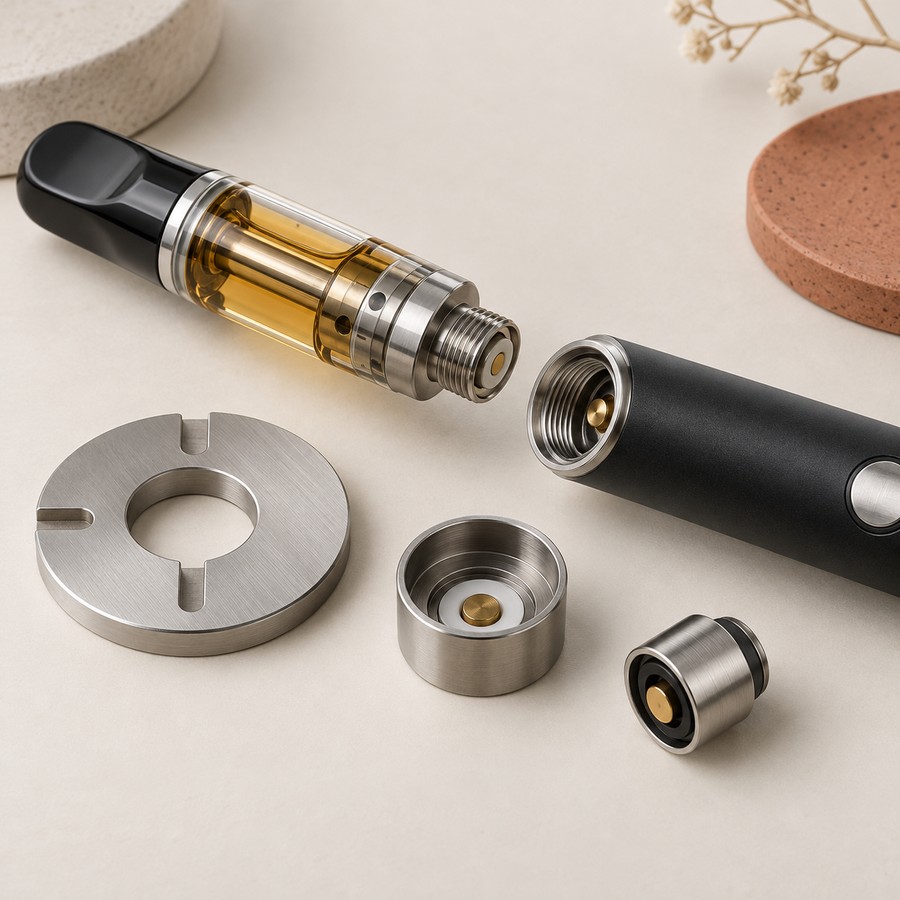
Don't guess the type of connection from a photo. In the pictures, the thread may be covered with a protective cap, and a cartridge that looks similar may belong to a different ecosystem. A more reliable source would be the instructions or specifications of the exact model.
In a compatible pair, the cartridge should be screwed in evenly, without skewing and without excessive force. If the thread is tight from the first turns, do not press it with force. The reason may be skewed installation, damaged thread or incorrectly determined format.
After screwing in, check to see if the cartridge is seated securely. Backlash, wobble, or a noticeable gap near the connection does not always indicate a malfunction, but it is a reason to check the design with the documentation. In batteries with a recessed socket, the appearance of the connection is especially important: the housing should not press on the cartridge.
The thread holds the cartridge in place, and the electrical contact is what makes the system work. There are usually contact pads on the bottom of the cartridge and inside the battery. If they are dirty or covered with liquid residue, the device may not recognize the cartridge even if it is threaded correctly.
Before connecting, inspect both surfaces in dry light. Do not use sharp objects to clean or attempt to change the height of the contacts yourself unless instructed to do so by the manufacturer. Doing so may damage the battery or cartridge.
Form factor directly affects actual compatibility. An open 510 battery leaves the cartridge outside, so it is easier to combine with different shapes, provided the threads match. At the same time, the cartridge in this design is less protected from accidental bumps in a bag or pocket.
Models with a hidden compartment cover part of the cartridge with a housing. This can be convenient for storage, but requires more accurate verification of dimensions. It is impossible to assume that any 510 cartridge will fit into the compartment: the diameter, length, shape of the mouthpiece and the location of the air slots can interfere.
If the battery has a lid, cap, or narrow seat, check to see if it can be closed after the cartridge is installed. Also, make sure the housing does not block any openings provided by the cartridge design. Without this check, “510 compatibility” is an incomplete answer.
For such models, it is useful to look for a list of supported cartridges or an indication of acceptable sizes in the product card. If the manufacturer only names its own series, this should be taken as a limitation, not an invitation to experiment with all the options on the market.
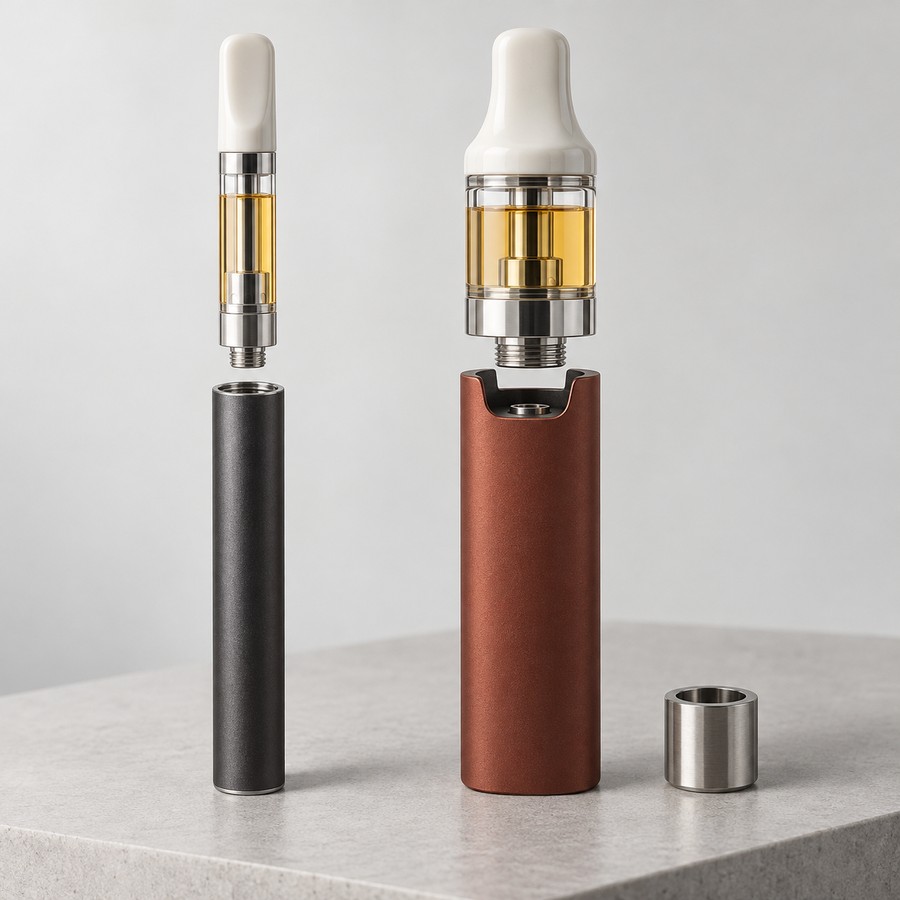
The same thread does not mean the same electrical behavior. Batteries may differ in activation method, regulation, preheating, indication and button logic. These features should be evaluated only through the recommendations for a specific cartridge and the technical data of the device itself.
You should not choose a high setting on your own based on the principle that “more is better.” If the cartridge manufacturer does not publish compatible settings, it is safer not to make assumptions and to consult its instructions or support. Excessive heat can degrade the performance of the component or cause it to fail prematurely.
Some 510 batteries are button-operated, while others are auto-activated. This is not a feature of thread compatibility, but it does affect daily use. For a cartridge with a specific air channel design, the method of activation can be important, so don't substitute testing for assuming that all cartridges behave the same.
Before using the battery for the first time, read the instructions: how it turns on, how it shows the charge, whether it has a lock, and how to turn it off. For devices intended for adults only, a lock is also useful when carrying it to avoid accidental activation.
Incompatibility doesn't always look like a complete inability to screw in the cartridge. Sometimes the connection is made, but the battery doesn't show any signs of working, the indicator light flashes, or the cartridge sits unnaturally high. Such symptoms don't need to be "treated" by tightening it harder.
If these signs appear, it is best to disconnect the cartridge, wipe the contacts with a dry, lint-free cloth, and check the specifications again. If the problem persists, the correct next step would be to consult the seller about the two exact models, rather than asking about the 510 format in general.
Practical selection can be reduced to a series of checks. It takes a few minutes, but reduces the chance of getting a couple who are only compatible in words.
If there is no confirmation at any stage, do not call the kit universally compatible. It is better to collect clarifications before placing an order than to try to adapt the components manually.
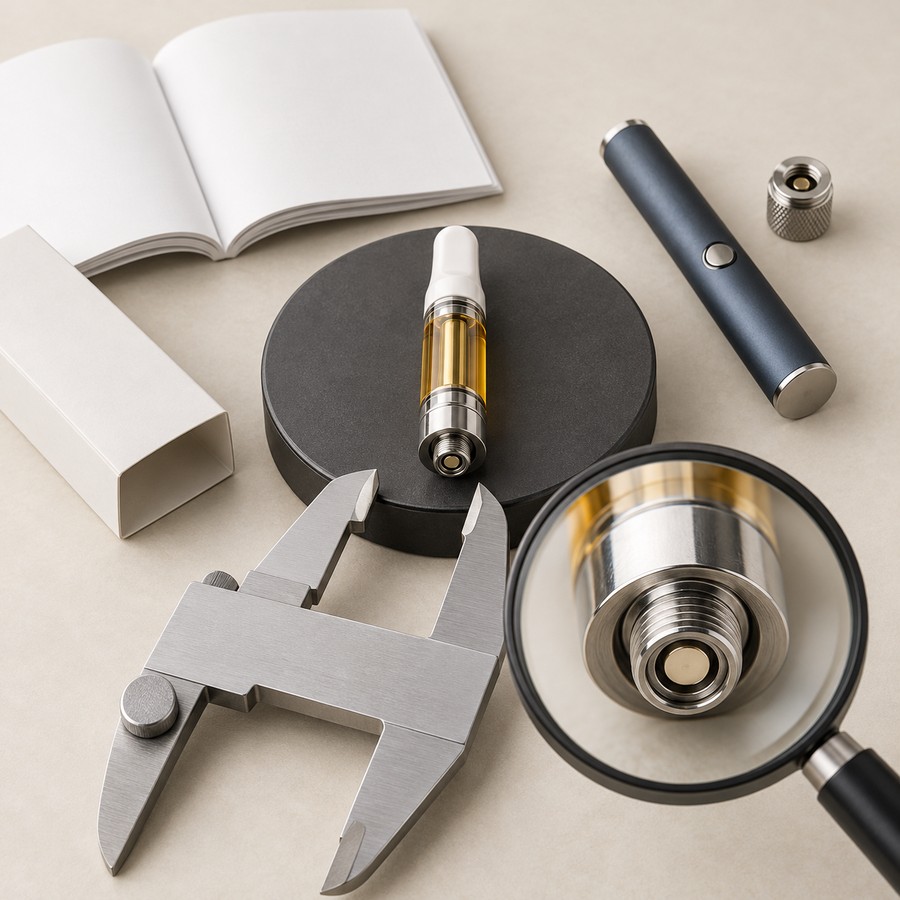
The most common mistake is to buy a battery based solely on its appearance or battery capacity. These parameters may be important, but they do not address the issue of fit and contacts. First comes compatibility, then design, size, charging method, and additional features.
The second mistake is to confuse a threaded system with a magnetic one. Some devices use a removable adapter: the cartridge may have a thread, but it is inserted into the battery itself through an adapter. If the adapter is not included or does not fit in size, a regular 510 battery will not become an automatic replacement.
The third mistake is to focus on experience with another model. Even two similar cartridges of the same brand may have different requirements. When buying, it is worth saving a link to the official specification or taking a photo of the packaging marking: this gives the seller the opportunity to check the issue objectively.
When descriptions aren't enough, be as specific as possible. The name of the cartridge, a photo of the bottom, the measured diameter, and the desired battery type will be more useful than the phrase "will it fit a 510?" This will allow the seller or manufacturer to compare designs rather than just answering randomly.
Relevant questions: does the battery have a 510 thread, does it fit a particular cartridge model, are there any diameter and height restrictions, does an adapter need to be included, does the housing close after installation? If the answer is based only on a similar photo, it is better not to consider it as definitive confirmation.
To choose a 510 battery for cartridge compatibility, check four things: the exact thread format, contacts, dimensions, and battery design requirements. The 510 designation is important, but by itself it does not guarantee that the cartridge will fit correctly in the housing and operate in the recommended mode.
Keep the exact name of your cartridge, find its official specification and compare it with the battery description. When data is lacking, the most sensible solution is to ask the seller about a specific pair of models. This is much more reliable than choosing by photo, price or general 510 marking.


