Cart
Your shopping cart is empty!
It's never too late to make things right :)


If a 510 cartridge leaks, it does not always mean that it is defective or of poor quality. In most cases, the cause is related to incorrect voltage, overheating, or usage. Leakage can occur due to too high a battery power, long puffs, or improper storage.
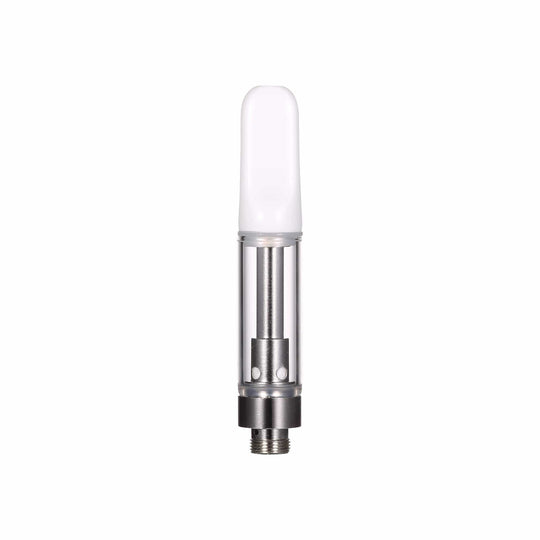
Ceramic empty vape cartridge for vape Ideal for both viscous liquids (e.g.
320.00 грн. 500.00 грн.
Купити →На сайті магазину
Reservoir and central channel
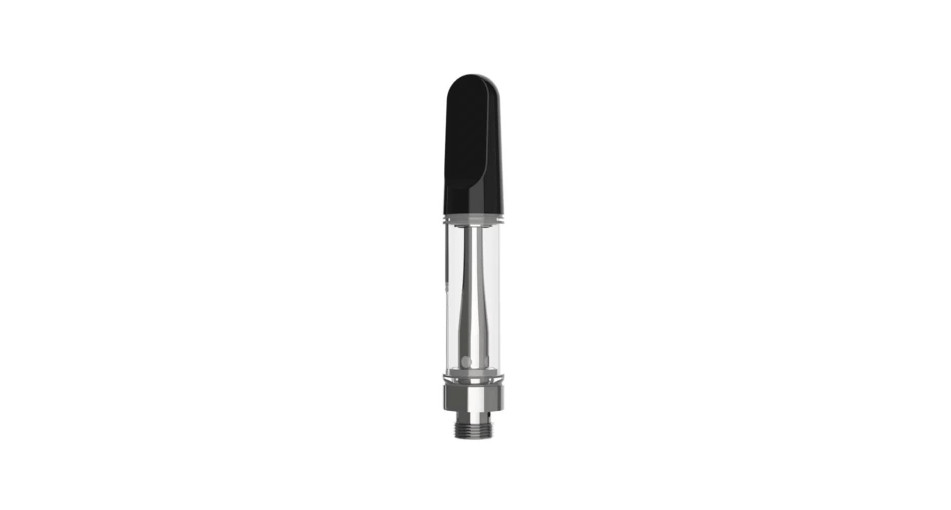
A standard 510 cartridge consists of a liquid reservoir, a central air channel, and a heating element. The liquid is fed to the coil through small holes or a porous ceramic element.
If excessive pressure builds up inside or the fluid becomes too fluid due to overheating, it can enter the central channel. The result is leaks or drops near the connector.
Fluid supply holes
The holes through which the extract enters the heating element are designed for a specific density. If the extract overheats and becomes thinner, it passes through them faster than it evaporates.
This is one of the reasons why a 510 cartridge leaks at too high a voltage.
Battery contact
The bottom of the cartridge connects to the battery via a 510 thread. If the thread is skewed or the cartridge is twisted too much, the center contact may be damaged.
Uneven contact leads to unstable voltage supply, which again leads to overheating or uneven heating.
Overheating due to high voltage
This is one of the main reasons. When the voltage exceeds the recommended range, the thick extract becomes more liquid. It does not have time to evaporate completely and starts to accumulate.
The result is a leak through the bottom or into the mouthpiece.
Too strong or long puffs
Long puffs create an increased vacuum inside the cartridge. This can draw in liquid faster than it heats up.
This is especially common with automatic batteries without voltage regulation.
Improper storage
It is best to store 510 cartridges vertically. If the device is lying horizontally or at an angle, liquid can gradually enter the central channel.
Temperature also plays a role. At high temperatures, the extract becomes thinner and the risk of leakage increases.
Damaged 510 thread
If the battery has play or the threads are worn, the cartridge may be uneven. In this case, the seal does not work properly and leaks appear.
Sometimes the problem is not in the cartridge itself, but in the battery.
Voltage sag
A cheap or worn out 510 battery can produce unstable voltage. During a puff, it drops, then rises sharply. This creates uneven heating.
Uneven heating is one of the causes of fluid accumulation and leakage.
Contact skew
If the battery's center pin is too recessed or protrudes too much, the contact will be incorrect. This affects current transfer and can cause local overheating.
Cheap 510 battery as the cause of the problem
Sometimes a user changes several cartridges in a row, thinking that they are defective. But the reason is the battery.
Stable voltage supply and high-quality contact reduce the risk of leakage much more than it seems.
Even a quality cartridge can start to leak if the usage mode is not selected correctly. Most problems occur not due to a factory defect, but due to overheating or improper operation.
Optimal voltage
For most thick extracts, the safe range is between 2.8–3.6 V. If you set the maximum mode right away, the extract will become thinner than necessary and will not have time to evaporate.
The practical approach is simple:
If a 510 cartridge is leaking, the first thing to check is whether the battery is operating at an overcharged rate.
Pause between puffs
The thick extract takes time to seep back into the heating element. If you take consecutive puffs without pausing, excess vacuum and pressure are created inside the tank.
It is optimal to pause for 10–20 seconds between puffs. This reduces the risk of fluid accumulation and leakage through the central channel.
Storage temperature
510 cartridges don’t like to overheat. If the device is left in a car in the summer or near a heat source, the extract will become less thick.
Recommended:
store the device in an upright position
avoid direct sun
do not leave in a hot car
Even a high-quality cartridge can leak if the temperature regime is violated.
Sometimes the problem cannot be solved by adjustments. There are situations when replacement is inevitable.
Factory defect
A rare but possible scenario. If the leak occurs immediately after opening the package under correct use, there is likely a seal or housing defect.
Worn spiral
After prolonged use, the ceramic element loses its heating stability. The liquid may not evaporate completely, accumulate and leak.
If the cartridge has been used for a long time and the taste has changed, and the leak has appeared without any change in mode, the resource may have been exhausted.
Constant leak regardless of settings
If:
but the leak persists, it is better to replace the cartridge. Continued use may lead to contamination of the 510 connector and unstable battery operation.
To minimize the risk, you should periodically:
Often the question "why does the 510 cartridge leak" disappears after the basic operating mode setting.
If a 510 cartridge leaks, the cause is usually overheating, incorrect puffing mode, or battery issues. The cartridge itself is not always to blame.
A stable 510 battery, correct voltage, and moderate use significantly reduce the risk of leakage. It is important to consider the device as a system, where each element affects the result.
On the DeviceUA blog, we regularly analyze the technical nuances of cartridge and battery operation so that problems can be resolved quickly and without unnecessary costs.